TSMC predicts that the global chip market will reach $1.5 trillion by 2030 because of AI
The current AI boom is causing scarcity for some and massive profits for others. Reuters reports that in a presentation earlier today, TSMC predicted that the global semiconductor market will reach $1.5+ trillion by 2030 – for context, the previous forecast was for $1.0 trillion.
And it’s clear that demand for AI silicon is driving the massive increase in sales – according to TSMC’s breakdown, 55% of that $1.5 trillion market will come from AI (and other high-performance computing), while smartphones account for only 20% and cars for only 10%.
We won’t even have to wait until 2030 to see the changes in the market – the company forecasts that demand for AI accelerator wafers this year will increase 11x compared to 2022. That’s only four years of calendar time, yet AI went from a curiosity to something every business executive talks about.
Naturally, the company is making hay while the sun shines – it is building out new production facilities faster than before. And not just in Taiwan, either.
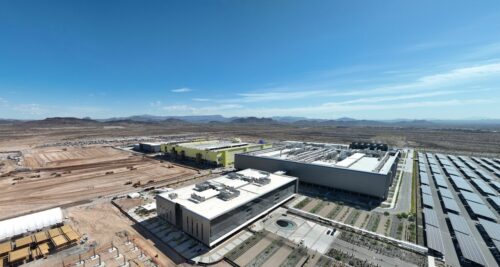
TSMC has a plant in Arizona and got a $6.6 billion grant from the US a couple of years ago. That first plant is already producing chips – not the cutting edge silicon (TSMC keeps that in Taiwan), but it is making 4nm chips and will move to 3nm and 2nm in time.
TSMC’s fab in Arizona
There’s a second fab that’s almost complete – TSMC will bring in the expensive and delicate machines that make the chips later this year. A third fab is under construction with a fourth coming soon, plus an advanced packaging facility. The company is even looking to buy more land for future expansions. According to TSMC, the Arizona fab will see a 1.8x year-on-year increase in production this year with yields similar to what fabs in Taiwan are seeing.
TSMC also has a fab in Japan – it makes older 22nm and 28nm chips. These aren’t suitable for high-performance compute parts, of course, but these nodes are popular for automotive parts and various low-power components. The company plans to start 3nm production in a second Japanese fab.
There’s also a plant being built in Germany – this will also start with 22nm and 28nm parts (which will make German car companies happy) with plans to add 16nm and 12nm capabilities later.
Source
Source